2022-Now / Fluid
Motion plus voice is the interface beyond the tablet.
Fluid started with COVID, public screens, and what built-in laptop cameras were suddenly capable of. Then the bigger pattern showed up: touch is not the right interaction model for everything.

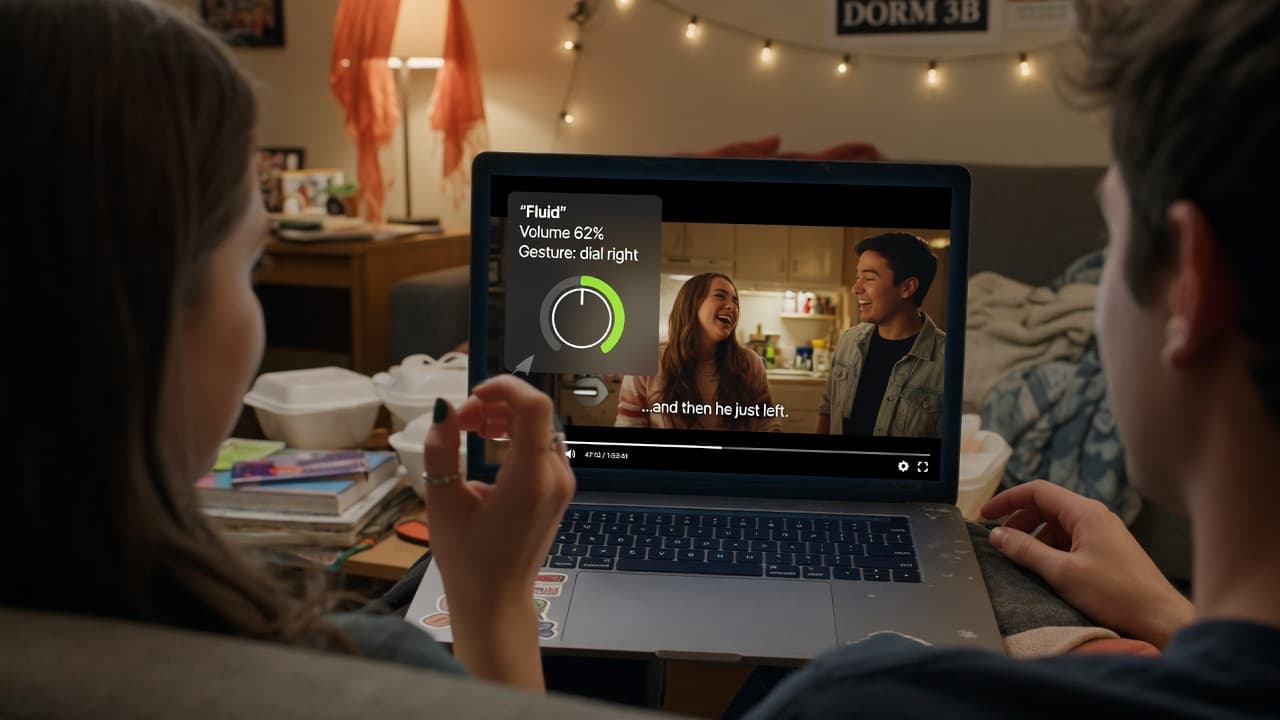
What I saw
Anything larger than a tablet starts to make touch feel wrong. TVs, public kiosks, digital menus, large displays, 3D content, games, learning, shopping, and couch-distance media all want a different interaction model.
Motion plus voice felt like the obvious answer: natural control at a distance, using the camera people already have.
Why it mattered
Dirty public screens were the COVID-era wedge, but the idea was bigger than hygiene. It was accessibility, usability, new use cases, media control, large-screen computing, and native 3D interaction on 2D displays.
No controllers. No wearables. No extra cameras. Just the webcam.
What I built / did
The first direction was 3D shoe interaction for ecommerce. The broader opportunity became more interesting: a motion layer for manipulating the web itself.
The current direction is a Chrome browser extension for touchless browsing, articles, Netflix, YouTube, and media controls, with a path toward richer 3D interaction.
What I learned
A good wedge matters. The platform-sized idea can be right and still need a smaller, cleaner entry point.
The product needs to feel useful immediately, not like a demo of the future.
Where it is now
Fluid is pre-launch and being repackaged around the browser extension thesis.
The long-term idea is still a motion OS: motion plus voice as a first-class interaction model for the surfaces touch and remotes never solved.